When I started Properdose, it wasn't just about building a "smart box" for pills. It was about solving a massive problem: why do people with chronic conditions, like Type 2 Diabetes, struggle to get results even when they have the right medicine?
To find the answer, I spent the last few months diving into two decades of clinical research. I looked at data from 2006 right up to today in 2026. I used AI to help me sift through thousands of medical papers from places like PubMed and the National Institutes of Health (NIH) to find the "gold nuggets" of information.
What I found changed how I think about chronic care. It turns out, nature has some incredibly powerful tools. However, they only work if you use them with absolute precision.
The "Big Three" Compounds: How They Actually Work
Through my research, three specific substances kept showing up with high success rates in published studies. I want to explain how they help your body using simple comparisons.
1. Berberine: The "Traffic Cop" for Sugar
In the research, Berberine is often compared to Metformin because it is so effective. A landmark study published in PMC2410097 found that Berberine helped patients lower their HbA1c from 9.5% down to 7.5% in just three months.
The Metaphor: Imagine your bloodstream is a highway and sugar (glucose) is the traffic. In a diabetic body, the "exit ramps" into your cells are blocked. This causes sugar to back up in the blood.
How it works: Berberine acts like a Traffic Cop. It stands at the exit ramps and signals your cells to open up and let the sugar in. It tells your body to stop making new sugar and start burning what is already there.
2. Alpha-Lipoic Acid (ALA): The "Rust-Proofing" for Your Nerves
Diabetes causes high blood sugar, and high sugar causes something called "oxidative stress." Recent meta-analyses, like the 2024 review in Exploration of Neuroprotective Therapy, show that ALA significantly reduces the "Neuropathy Impairment Score" in patients.
The Metaphor: Think of your nerves like copper wiring. High blood sugar is like salt water that causes those wires to rust and fray. This is why people feel tingling or pain in their feet.
How it works: ALA is a powerful antioxidant. Think of it as Rust-Proofing spray. It goes into your cells to neutralize the "rust" before it can damage the wiring. This helps calm the pain and protects your nerves long-term.
3. Cinnamon: The "WD-40" for Insulin
Research published in the Journal of Medicinal Food confirmed that cinnamon can lower fasting blood sugar levels by significant margins.
The Metaphor: Imagine your cells have locks, and Insulin is the key. In diabetes, the locks get "sticky" or jammed. No matter how many keys you have, you cannot get the door open.
How it works: Cinnamon acts like WD-40. It helps lubricate those cellular locks so that the insulin keys you already have can turn more easily. It makes your body much more sensitive to its own insulin.
The "Missing Link" in All Research: Adherence
Here is the frustrating part I found in almost every study: The results only happen if you don't miss a dose.
In clinical trials, researchers literally watch patients take their pills. But in the real world, life happens. Recent 2024 studies show that nearly 50% of patients with chronic diseases fail to follow their treatment plan correctly (PMC12567100). This is often due to "pill fatigue" or simply forgetting.
If you take Berberine three times a week instead of three times a day, the "Traffic Cop" isn't there when the sugar rush hour hits. The damage continues because the consistency is gone.
Why I Built Properdose?
This is exactly why I am building Properdose. I realized that giving a patient a list of supplements and medicines is only half the battle. The other half is ensuring those compounds actually enter the body at the right time, every single day.
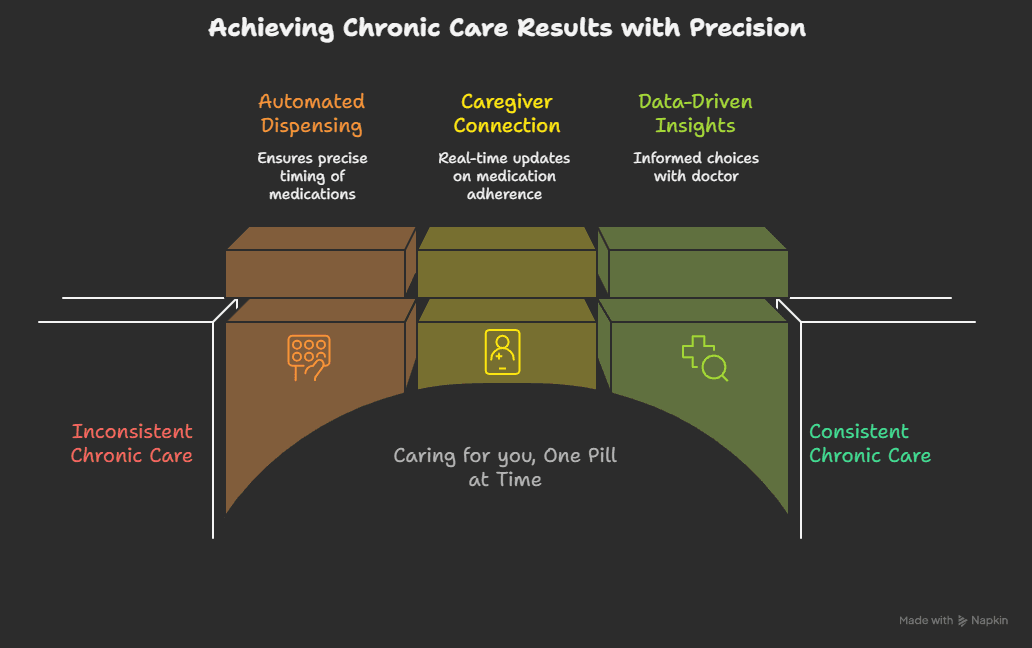
Properdose is designed to take the "thinking" out of the equation:
Automated Accuracy: It knows exactly when your Berberine or your prescription meds are due and gives them to you automatically.
Caregiver Connection: If you are caring for a parent with diabetes, you don't have to call and ask if they took their pills. You will see it on your phone in real-time.
Real Results: When you combine world-class research with the precision of our IoT dispenser, you finally get the health results you have been working for.
My goal for the thousands of you visiting this blog is simple. I want to provide you with the best data available so you can make informed choices with your doctor. Science has given us the tools. Properdose is here to make sure you actually get to use them.