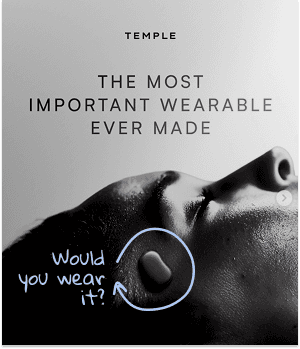
While the last decade focused on tracking steps and heart rate, a new class of deep-tech wearables is emerging. At the center of this conversation is the Temple device, an experimental wearable introduced by Deepinder Goyal through his research initiative, Continue Research.
This isn't just another gadget; it is a research-grade instrument designed to monitor the most critical organ in the body: the brain.
How it Works: The Science of Cerebral Monitoring
The Temple device is a non-invasive sensor worn on the forehead that measures Cerebral Blood Flow (CBF) and oxygenation in real-time. It utilizes two sophisticated optical technologies to "see" inside the body without the need for stationary clinical machines like MRIs.
Near-Infrared Spectroscopy (NIRS): This uses light wavelengths that can safely penetrate the skin and skull. Because oxygenated and deoxygenated blood absorb this light differently, the device can calculate exactly how much oxygen is reaching your brain.
Speckle Contrast Optical Spectroscopy (SCOS): This tracks the "speckle" patterns of light to measure the speed and volume of blood moving through the smallest vessels in the brain.
The Gravity Aging Hypothesis
The core motivation behind Temple is the Gravity Aging Hypothesis. This theory, spearheaded by Goyal's personal research initiative, Continue Research, suggests that because humans spend most of their lives upright, gravity constantly pulls blood away from the brain.
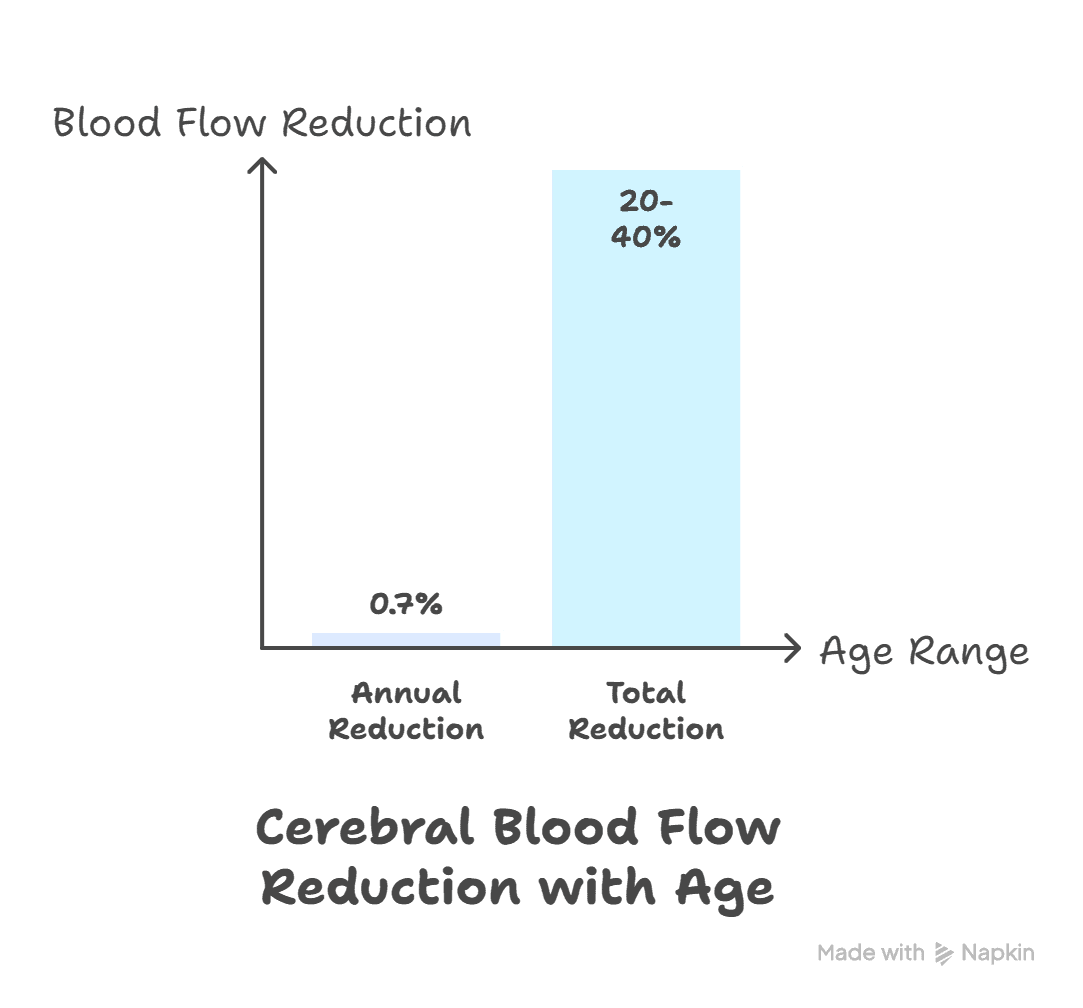
The Fact: Research confirms that cerebral blood flow naturally decreases with age, dropping by approximately 0.7% per year. This results in a 20 to 40% reduction between the ages of 20 and 80.
The Theory: The hypothesis proposes that this minor but constant reduction in blood flow "starves" ancient brain regions like the hypothalamus and brainstem, which regulate hormones, immunity, and repair.
Research and Supporting Evidence
Goyal has committed over $25 million (₹225 crore) to explore these biological links. The research points toward "brain-first" aging, where the brain's "plumbing system" determines the lifespan of the rest of the body.
Supporting studies from the California Institute of Technology (Caltech) and the Keck School of Medicine have explored similar portable SCOS systems to assess stroke risk by measuring vessel stiffness during breath-holding exercises. This highlights a growing scientific consensus that portable brain-flow monitoring is technically possible and clinically interesting.
The Good: Why Monitor Brain Flow?
Early Detection: Continuous monitoring could identify subtle declines in circulation decades before cognitive symptoms like memory loss appear.
Biofeedback for Performance: High performers can use real-time data to understand how stress, caffeine, or posture impact their mental "fuel supply."
Longevity Focus: It shifts the health conversation from reactive treatment to proactive maintenance of the body’s most energy-intensive organ.
Inversion Therapy Insights: The device is being used to test whether practices like yoga inversions or inversion tables can "reset" brain circulation. Early internal tests suggested a 7% baseline increase in daily average brain flow after six weeks of passive inversion.
The Bad: Risks and Expert Critiques
Despite the excitement, the medical community remains cautious. Several prominent neurologists and researchers have raised concerns:
Not a Medical Device Yet: Temple is currently a research prototype. It is not FDA-approved or certified by Indian health authorities to diagnose or treat any condition.
Anxiety and False Alarms: Constant monitoring of sensitive biomarkers can lead to "health anxiety" in healthy individuals, where minor, normal fluctuations are misinterpreted as serious medical issues.
The Verdict: A Bold Experiment in Longevity
The Temple device represents a high-stakes bet on the future of human health. Whether it becomes a staple of the Indian health-tech ecosystem or remains a niche research tool depends on the upcoming peer-reviewed data from Eternal and Continue Research. For those interested in the cutting edge of longevity, it is undoubtedly the most significant wearable to watch in 2026.
Beyond the Brain: A Universal Key to the Human Body
The technology powering Temple is not limited to neurological research. Its ability to "see through tissue" has profound applications that could help us understand the human body in entirely new ways.
Neonatal and Pediatric Care One of the most vital applications of NIRS is in neonatal intensive care units. Because the technology is non-invasive and uses no radiation, it is used to monitor the brain oxygenation of premature infants. This ensures that their most sensitive organs are receiving enough blood flow during the most critical days of their development.
Wound Healing and Reconstructive Surgery Doctors use similar optical sensors to check the "viability" of tissue. For example, after a complex surgery, surgeons can monitor the blood flow to a specific area in real time to ensure the tissue is "taking" and receiving enough nutrients to heal. This prevents complications before they become visible to the naked eye.
Ergonomics and Workplace Wellness By applying this tech to different parts of the body, researchers can study the impact of sedentary lifestyles. It can measure how blood flow is restricted in the legs during long periods of sitting or how posture affects the oxygenation of the neck and shoulder muscles.