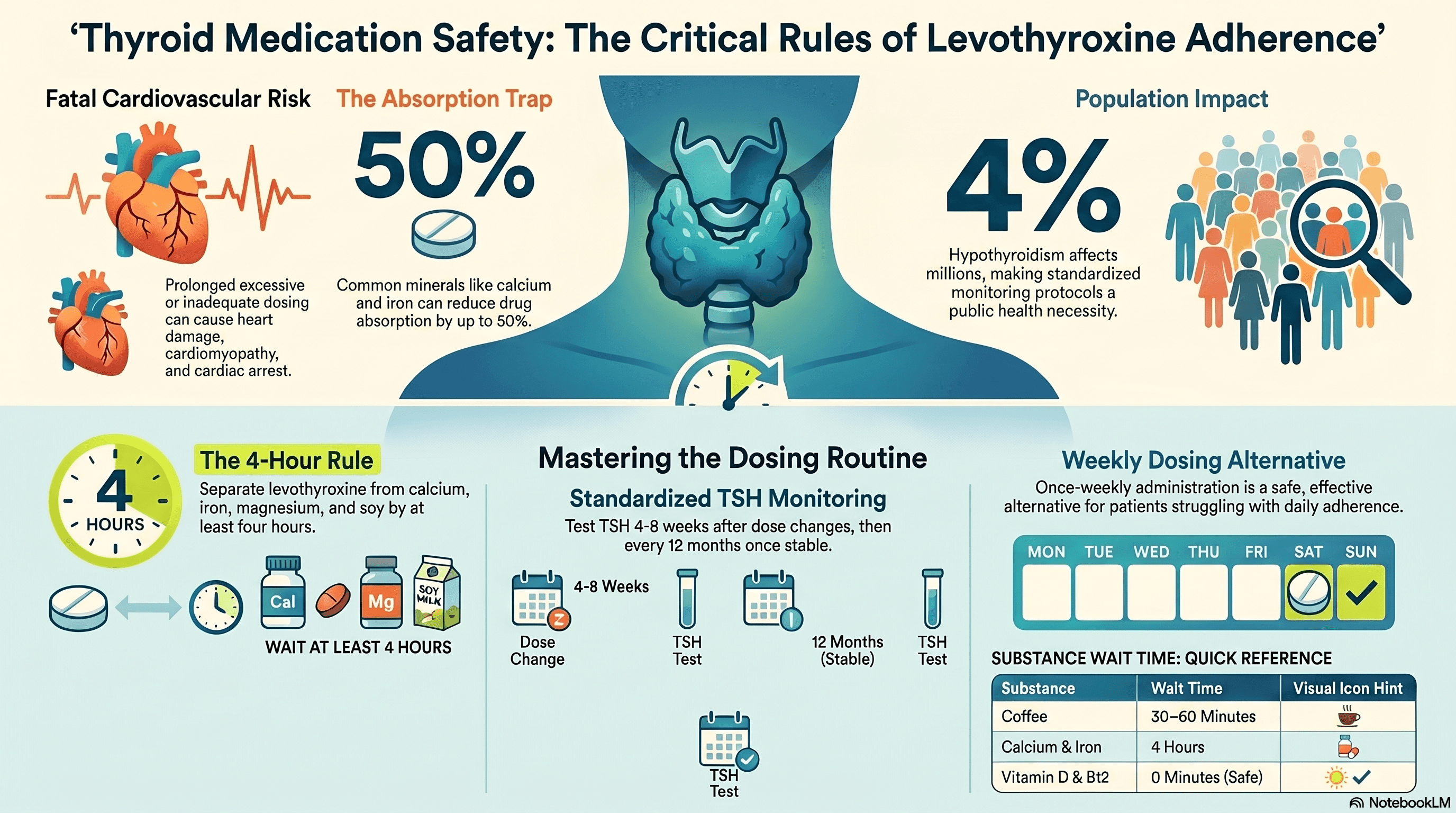
Life gets busy, and sometimes you simply forget to take your thyroid medication. If your pill is still sitting on your nightstand, take a deep breath! Hypothyroidism affects 4% to 5% of the population worldwide, and levothyroxine is the drug of choice for replacement therapy. Missing a single dose is an incredibly common experience.
Because your body relies on steady hormone levels to regulate your metabolism, energy, and heart rate, consistency is crucial—but perfection isn't required.
--------------------------------------------------------------------------------
⏱️ TL;DR: The Quick Summary
Don't have time to read the whole article? Here are the most important takeaways:
Don't Panic Over One Day: If you take Levothyroxine (T4), it stays in your body for about a week, so missing one dose usually won't cause major symptoms. You can typically double up the next day under medical guidance.
The T3 Warning: If your medication contains T3 (like Liothyronine, Armour Thyroid, or NP Thyroid), do not double up if you miss a day. It can cause heart palpitations and anxiety. Just resume your normal schedule.
The 4-Hour Rule: Never take your thyroid pill at the same time as calcium, iron, or magnesium multivitamins. These block your body from absorbing the medication and must be separated by at least 4 hours.
When It Becomes Dangerous: Repeatedly missing doses over weeks or months can lead to severe health issues, including heart damage, extreme fatigue, and dangerously elevated cholesterol.
How to Fix It: Automated pill dispensers, phone alarms, setting up a bedside "medication station," or asking a caretaker to help monitor your daily routine can drastically improve your consistency. If you cannot stick to a daily schedule, talk to your doctor about alternative research-backed options, like safe once-weekly dosing.
--------------------------------------------------------------------------------
The Science and Statistics: Why Do We Miss Doses?
Research shows that patients often struggle to take their thyroid medication consistently because of the strict rules surrounding it: you have to take it daily, on an empty stomach, and wait 30 to 60 minutes before eating.
Interestingly, the condition itself can make remembering difficult. Studies have found a significant association between medication non-adherence and self-reported "brain fog" in hypothyroid patients. Additionally, patients with comorbid conditions like obesity or type 2 diabetes are significantly more likely to miss their levothyroxine doses.
When you mix medications, the stakes get higher. Research shows that taking your thyroid pill at the same time as coffee reduces its absorption by 27% to 36%. Common supplements like calcium and iron bind to levothyroxine in your gut, and can block absorption by 20% to 50%.
Clear Steps: What to Do If You Miss a Dose
The impact of a missed pill—and what you should do next—depends on the specific type of thyroid medication you take:
If you take Levothyroxine (T4-only medications like Synthroid or Tirosint): Levothyroxine has a long half-life of 6 to 7 days, meaning it acts as a buffer in your system. If you miss one dose, you can take it as soon as you remember, or you can typically double up the next day. A single missed dose is unlikely to cause major symptoms, though you might feel mild fatigue.
If you take Liothyronine (T3) or Natural Desiccated Thyroid (NDT like Armour Thyroid): These medications act much faster and have a short half-life of about 24 hours. Missing a dose can cause noticeable symptoms within hours, such as sudden fatigue, brain fog, or feeling unusually cold. You should NOT double up on T3 or NDT the next day. Doing so can cause rapid hormone peaks leading to hyperthyroid-like symptoms such as palpitations and anxiety. Simply resume your normal schedule.
Warning: Never miss a dose if you are pregnant, adjusting to a brand new dose, or on suppression therapy after thyroid cancer. Repeatedly missing doses over an extended period can lead to serious complications, including dangerously elevated cholesterol, heart damage, and in extremely rare cases, a life-threatening condition called myxedema coma.
--------------------------------------------------------------------------------
What Actually Helps? Research-Backed Solutions
If you or a loved one are constantly missing doses, research highlights several effective strategies to get back on track:
1. Frequent Clinic Check-Ins: A case study demonstrated that a patient with severe non-adherence and dangerously high TSH levels achieved normal thyroid levels simply by attending weekly clinic visits for pill counts. Another study found that monthly endocrinology visits and dedicated education significantly improved patient adherence.
2. Telehealth Monitoring: For patients who cannot easily travel to a clinic due to time or financial constraints, utilizing telehealth visits to assess medication adherence is a highly effective, modern alternative to ensure someone is holding you accountable.
3. Once-Weekly Dosing (Under Doctor Supervision): For patients who absolutely cannot stick to a daily routine, a meta-analysis of clinical trials found that taking a larger dose of levothyroxine once a week is a safe and suitable alternative for non-adherent patients. While weekly administration resulted in slightly higher TSH levels than daily dosing, the levels still safely remained within the normal, healthy reference range.
--------------------------------------------------------------------------------
Staying on Track with Automated Systems like Properdose
Automated medication management systems and smart pill dispensers, like Properdose, can take the mental burden out of managing hypothyroidism. Here is how they align with the best clinical practices:
Managing the 4-Hour Rule: Because calcium, iron, and magnesium supplements physically bind to levothyroxine in the gut, they must be separated from your thyroid pill by at least 4 hours. Automated systems can dispense your levothyroxine at 6:00 AM and lock away your multivitamins until lunch, preventing accidental interactions.
Consistent Timing: These systems send alarms and app notifications to your phone, ensuring you take your medication at the exact same time every day to maintain steady blood levels.
Tracking for Your Doctor: Knowing a system (or a doctor) is tracking your medication use can greatly motivate a patient to stay adherent. Automated logs help rule out non-adherence if your TSH levels are fluctuating.
--------------------------------------------------------------------------------
A Guide for Caretakers
If you are caring for someone with hypothyroidism, remember that the condition itself causes cognitive slowing and memory problems. Here is how you can support them:
Establish a "Medication Station": Set up a dedicated, visible spot (like a bedside table or near the coffee maker) for their pills and a glass of water to reduce the chance of forgetting.
Help with Scheduling: Ensure they wait 30 to 60 minutes after their pill before serving them breakfast or coffee.
Monitor Symptoms: Watch for unexplained weight gain, heavy fatigue, or depression, as these are signs they may be missing doses and their hormone levels are dropping.
Gentle Accountability: Tell your loved one you are going to help them. Even a simple morning text or a gentle reminder can help reinforce their daily habit, especially if they are just starting a new routine.
Managing hypothyroidism is a marathon. If a dose gets missed, don't panic. Follow the safe steps to correct it, leverage technology and support systems, and focus on building a better routine for tomorrow!